A - Airway
Open the airway by using the head-tilt/ chin-lift to pull the tongue away from the back of the throat.

- Kneel at the side of the casualty's head or shoulders.
- Place your hand (the hand closest to the casualty's head) on his forehead.
- Apply firm, backward pressure with the palm of your hand. This pressure will cause the casualty's head to tilt back.
- Place the fingertips of your other hand under the bony part of his chin, not on the soft flesh under his chin. Pressing on the soft flesh under the chin could result in blocking his airway.
- Lift his chin with your fingertips. Continue to lift the lower jaw until his upper and lower teeth are almost brought together. The mouth should not be closed as this could prevent air from entering the casualty's airway.
B - Breathing
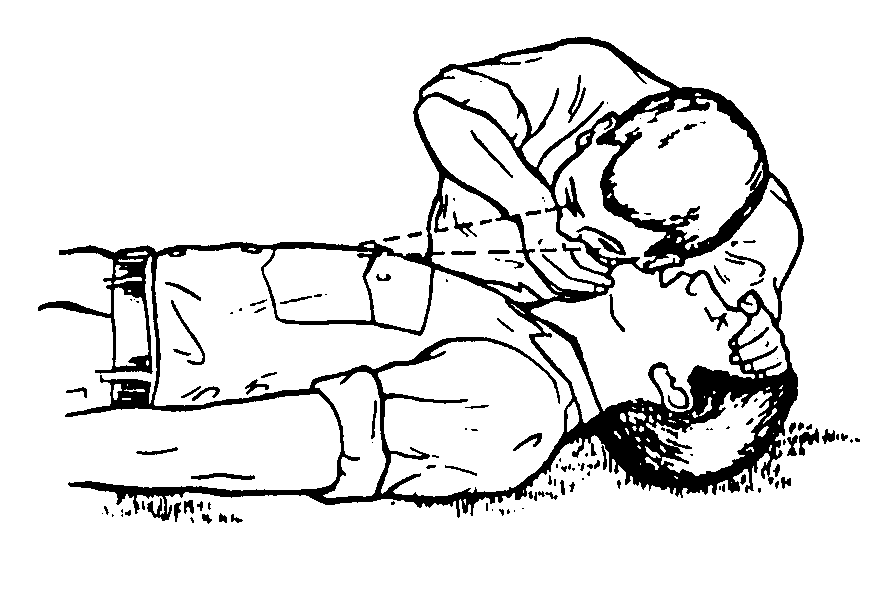
Check for breathing by looking, listening and feeling for air coming from the victims mouth and nose. Do this by placing your cheeks near to the nose of the victim while looking at the chest to see if it rises or falls. this should take approximately 3-5 seconds. Do not let go of the victims' head.
C - Circulation
Check to see if the person's heart is beating by checking at the carotid artery (the pulse at the side of the neck beside the windpipe). If the person is breathing there will be a pulse (if breathing n no pulse, it might b a ghost..lol). Feel for this pulse approximately 5 - 10 seconds.

If there are no life threatening emergencies, check for other injuries. These include broken bones, bleeding, bruising and other injuries. At this time, a head to toe check should be done.

